CAUT home | Background and theory | Generation of the CAUT lines
Genetics | Seed irradiation and sector analysis | Verification of the CAUT lines
Working with the CAUT lines
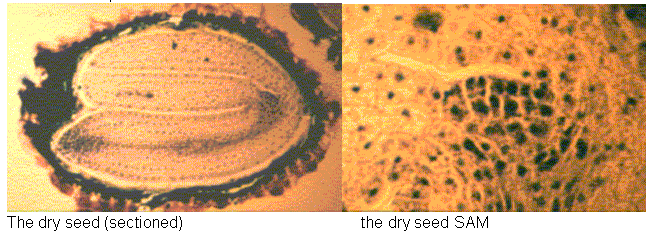
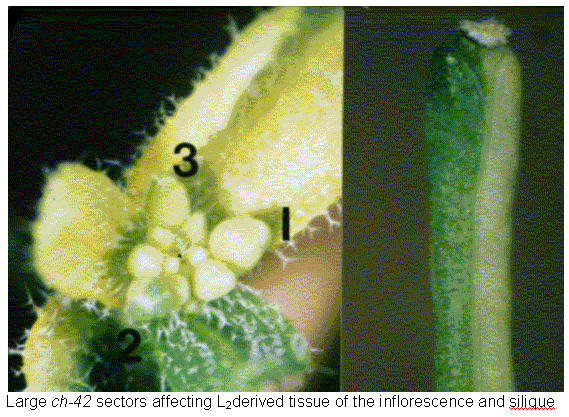
The CAUT lines were designed for studies of cell-autonomy in the Arabidopsis shoot, leaves and flowers but in order to use them effectively you have to have some background in the development of the shoot apical meristem (SAM) and its derivatives. The Arabidopsis SAM consists of a group of about one hundred cells set up in three layers (L1, L2 and L3). It is set up late in embryogenesis and remains about the same size throughout vegetative and reproductive growth. Once set up the layers are clonally distinct and cells within them have characteristic fates. The L1 layer contributes to a one cell thick epidermis covering the plant. As it contains little chlorophyll sectors deficient in chlorophyll are not seen in this layer. The L2 layer contributes most of the green tissue in the leaves and flowers and a layer in the stem. The L3 layer contributes a core of tissue in the leaves and flowers and the centre of the stem. Chlorophyll deficient sectors can be visualised in green tissues derived from L2 and/or L3 but a colourless genetically wild-type epidermis derived from L1 overlies such sectors.